Freshwater and Saltwater Microfishing in Japan
by Ben Cantrell
I’m writing this post 6 years after the fact. I’ve been microfishing pretty seriously for several years now, and I’d like to write this post to celebrate my first introduction to microfishing, which in hindsight was an incredible way to be introduced to the sport obsession.
In 2008 I visited Japan for the third time, but it was the first time travelling there since I became interested in fishing, especially fishing for new species. My lifelist was only in the low teens, but I was determined to add to it! I didn’t do any research before the trip, so I had to depend on my Japanese friends and advice from the owner of the tackle shop we stopped in. The shop owner set us up with gear that was new to me – extremely long flexible rods, incredibly small hooks, incredibly small floats, and an assortment of artificial and live bait options. We packed up the car and headed up into the mountains near the city of Okayama. We found a good spot to park the car next to the creek flowing adjacent to the road. The scenery was great.
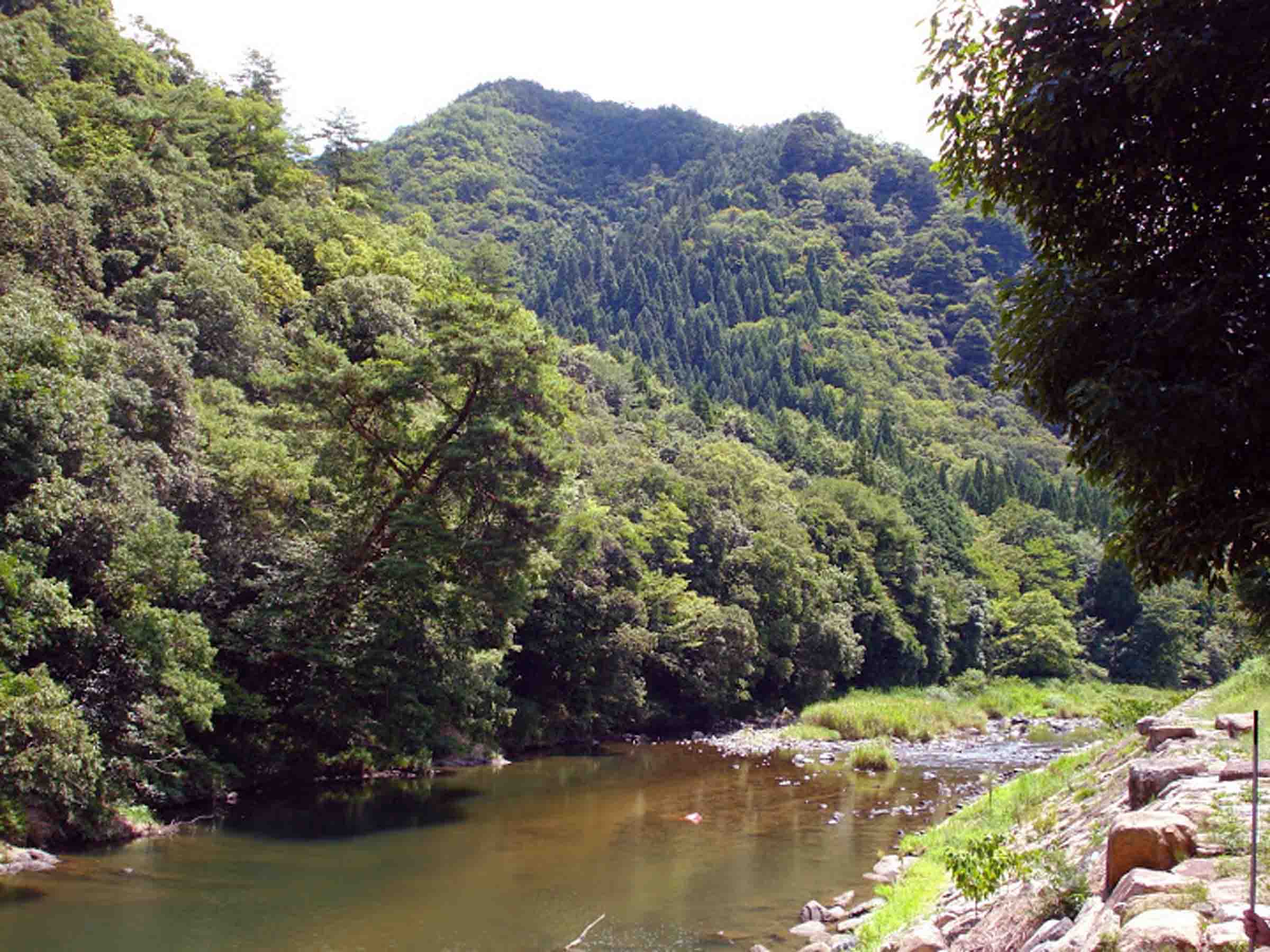
We saw plenty of small fish in the pool, so we got to work setting up our gear.

Despite our lack of skill, the fish were eager biters and we started catching a few. We ended up catching two species, but I remember seeing quite a few others. If only I could go back! What’s really cool about my first microfishing catch was that it was a species of Tanago, a name you’ll recognize if you use the microfishing hooks with the same name.

Oily Bitterling (Tanakia limbata) – Aburabote in Japanese

Dark Chub (Nipponocypris temminckii) – Kawamutsu in Japanese
A few days later, another friend and I joined up with a semi-professional bass fisherman at the Asahi River dam in Okayama Prefecture. His name is Nagase, and his blog (Japanese only) is at the link below.
Nagase took us out in his boat, and we fished the reservoir above the Asahi River dam. I knew largemouth bass were our priority, but secretly I hoped for a few native species as well. As it turns out, the introduced largemouth bass has done an excellent job devastating the populations of native species in the reservoir. The only other fish we saw were a couple of (also introduced) bluegill. Fishing was tough that day due to there being a tournament on the reservoir the day before, but we managed a few fish.
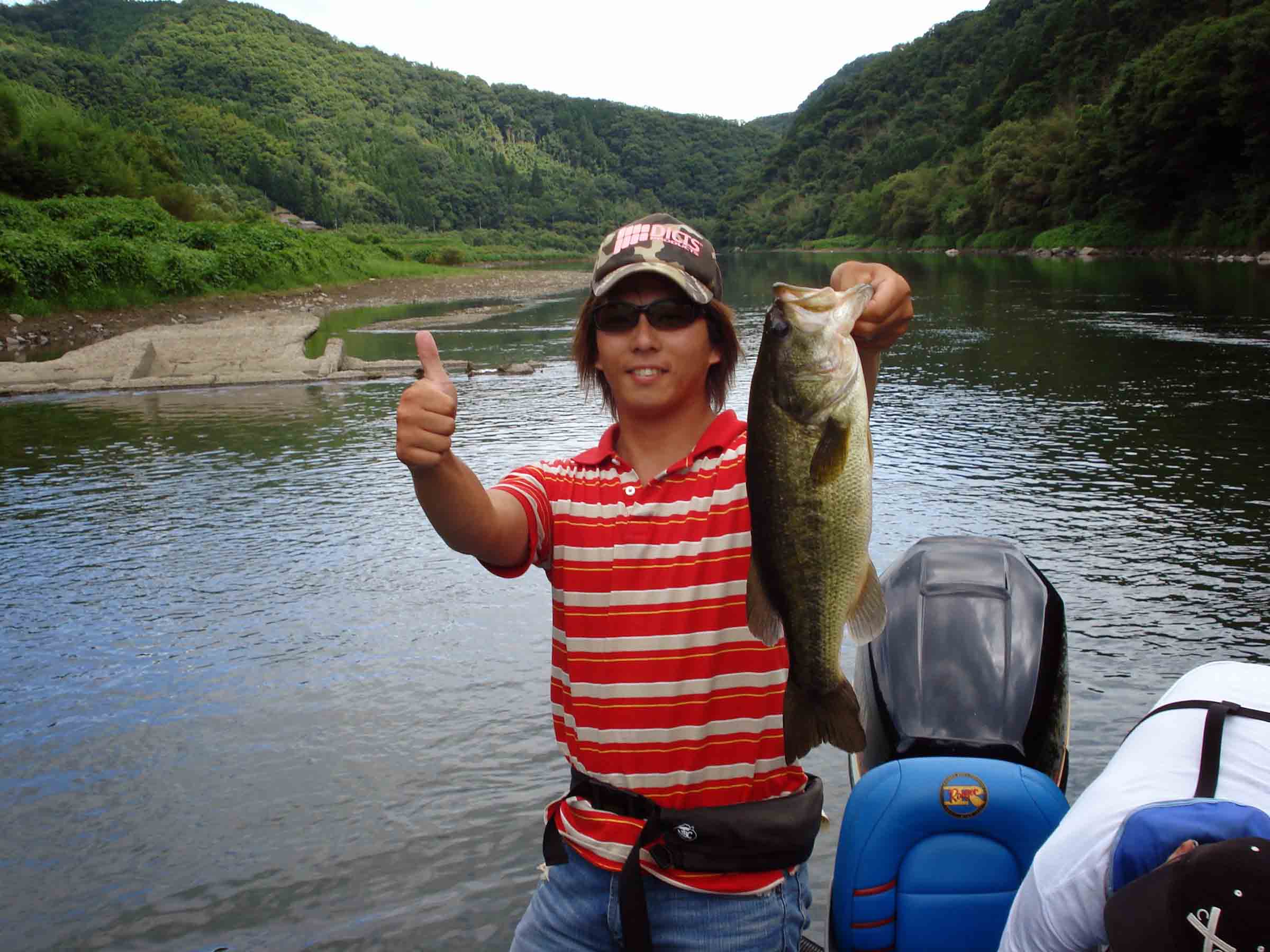
Largemouth Bass (Micropterus salmoides)
We had one more excursion, a weekend trip to Shiraishi Island, which is a 30 min ferry ride from the town of Kasaoka. Getting the opportunity to microfish in saltwater in the same week as my first freshwater microfishing experience is something I’ll never take for granted. What a great opportunity! A small shop on the island sold frozen shrimp for bait and rented microfishing tackle for a very low price.
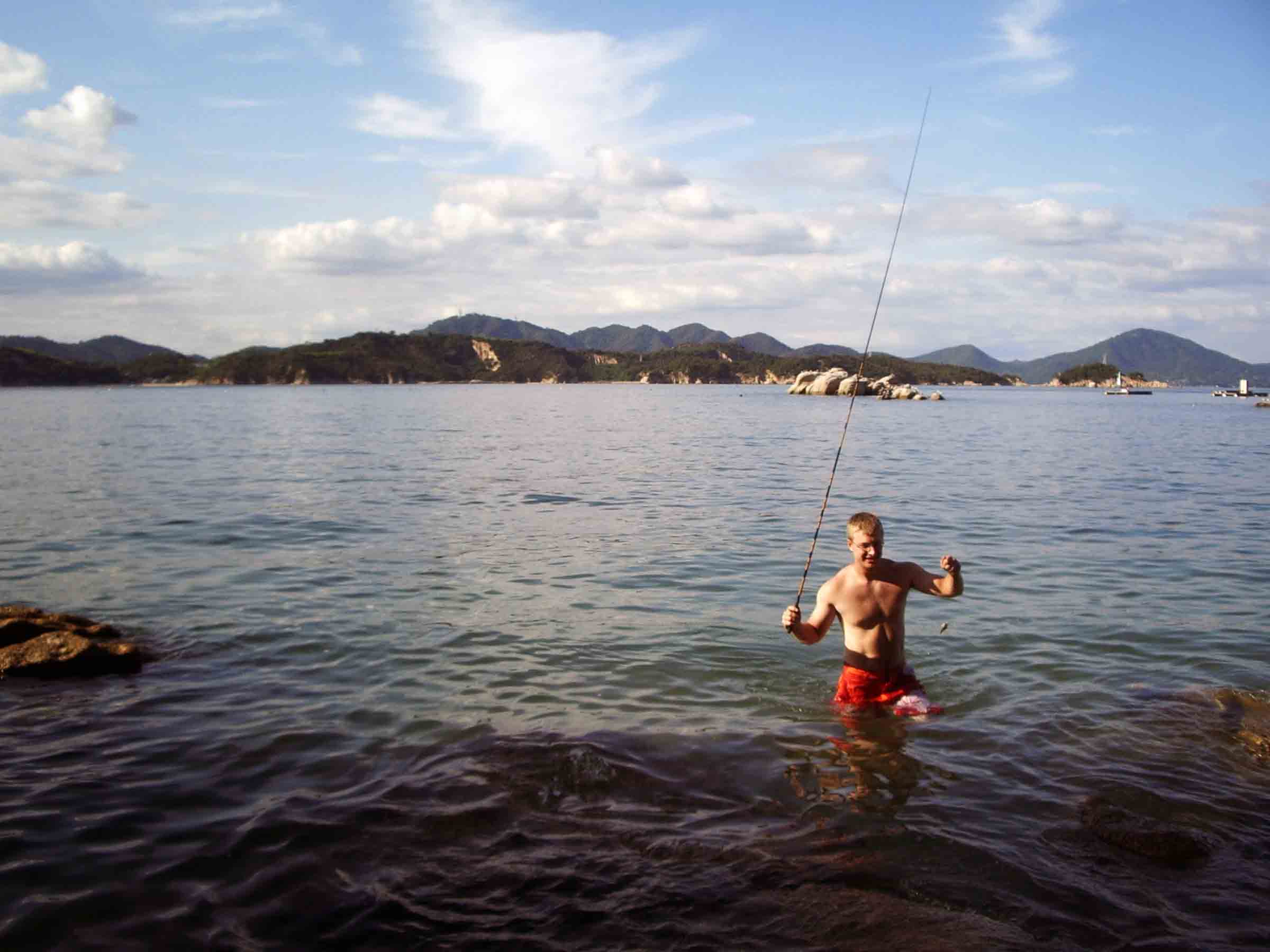
Fishing was best as the tide was rising because the fish came in among the rocks to feed. We caught dozens of each of the following species.

Multicolorfin Rainbowfish (Parajulis poecilepterus) – Kyusen in Japanese – male
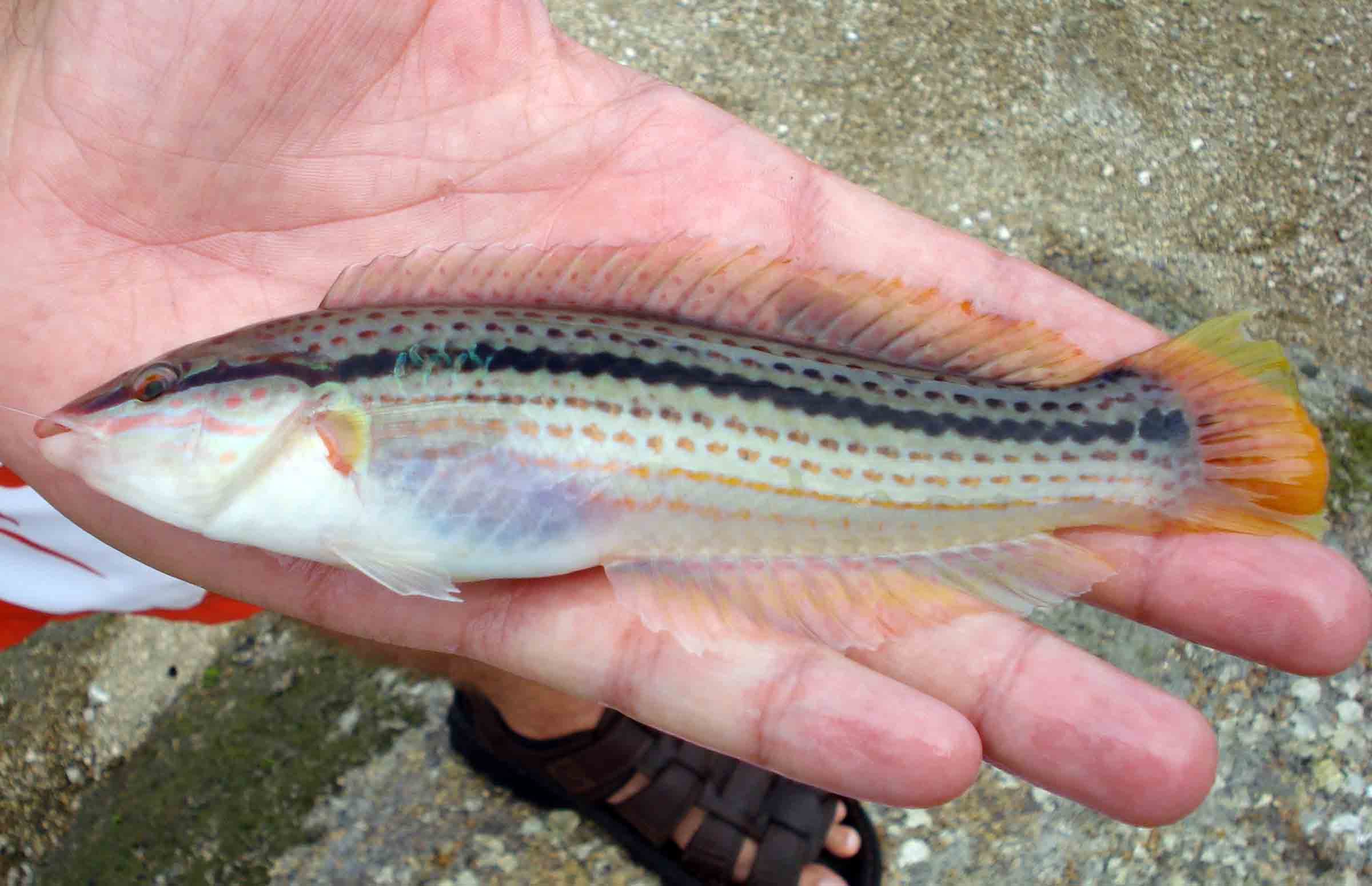
Multicolorfin Rainbowfish (Parajulis poecilepterus) – Kyusen in Japanese – female
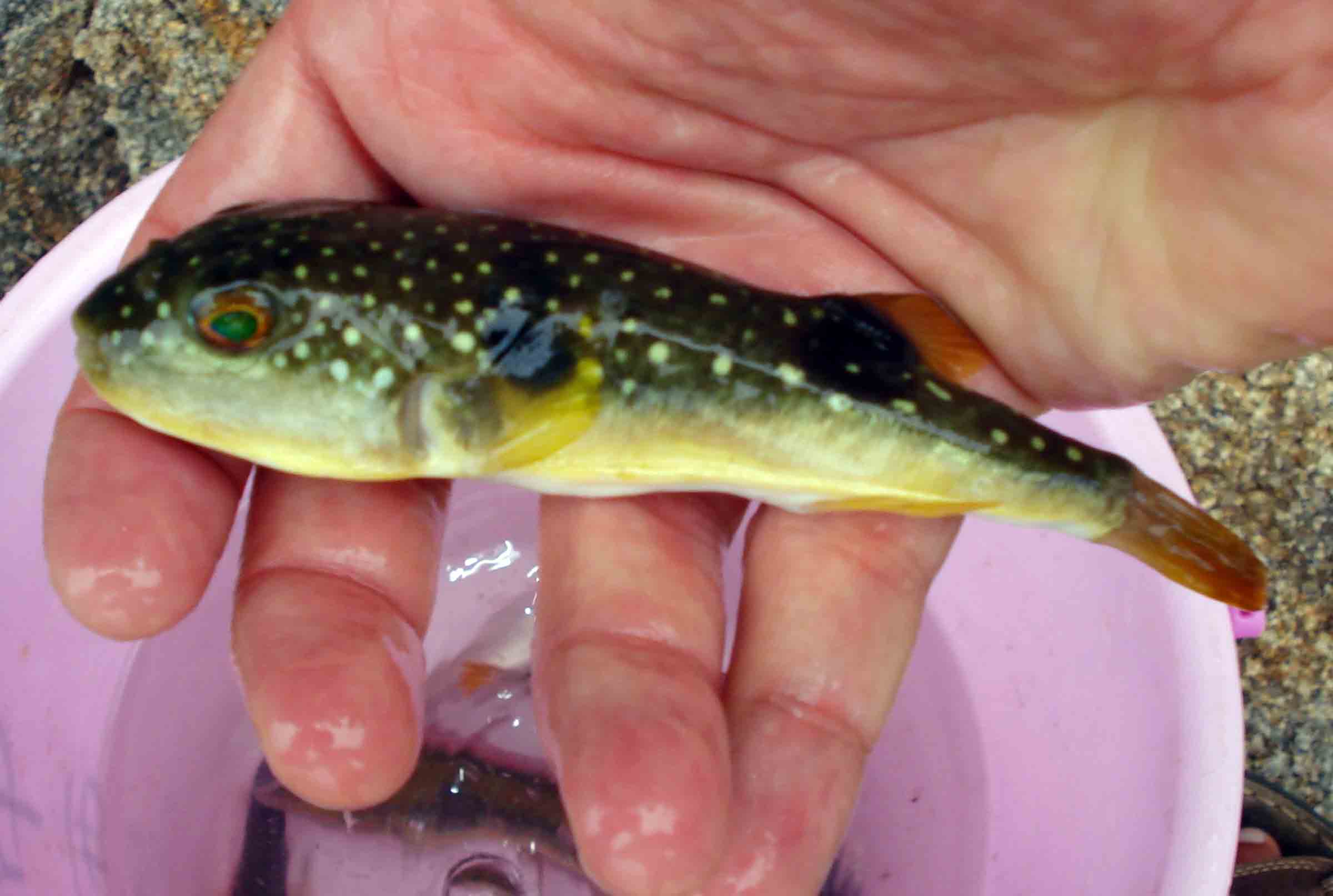
Grass Puffer (Takifugu niphobles) – Kusafugu in Japanese
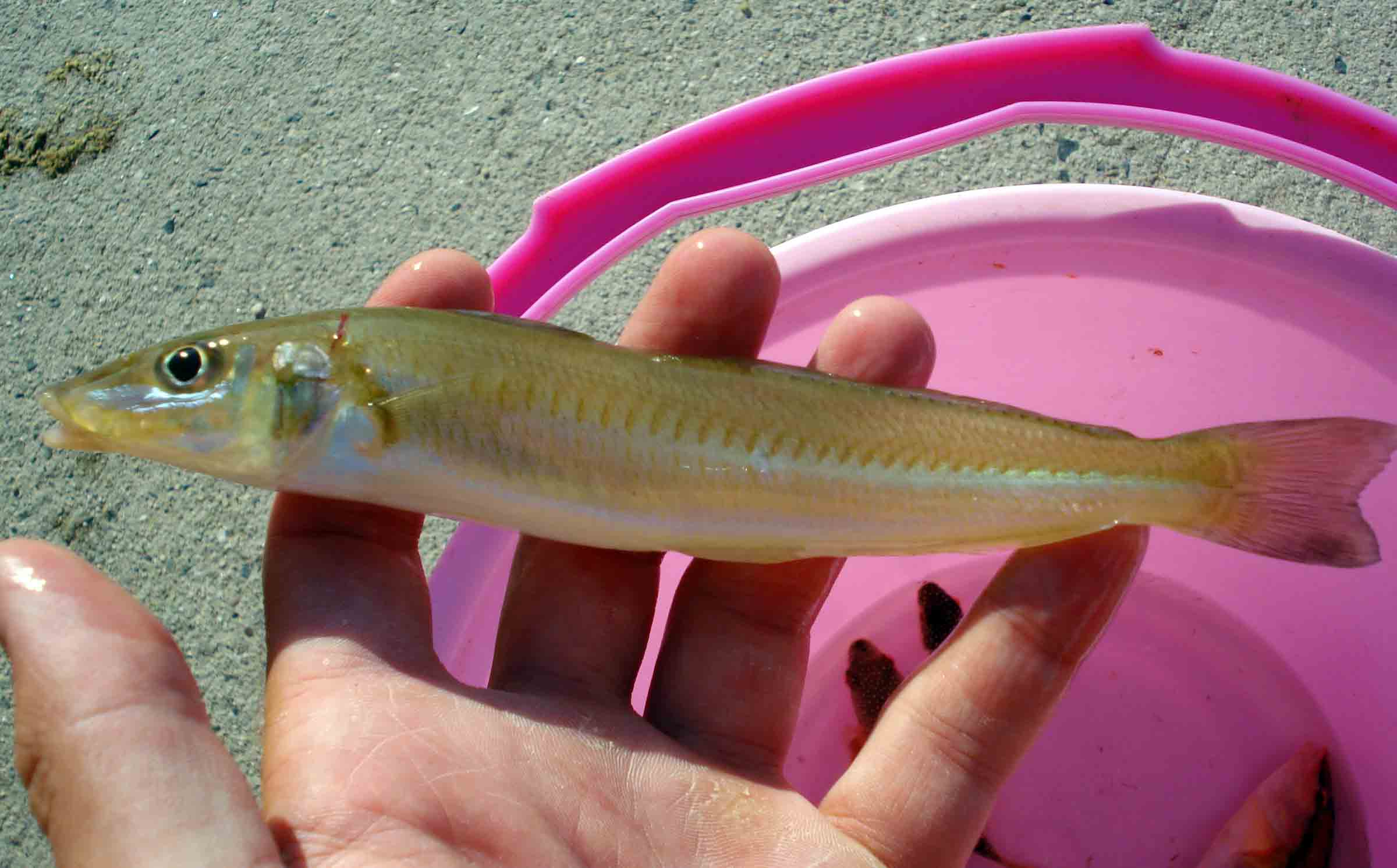
Japanese Whiting (Sillago japonica) – Shirogisu in Japanese
I don’t know if I’ll ever get the chance to visit Japan again, but if the opportunity arises I will definitely plan more fishing excursions. Those mountain creeks in particular are a place I’d love to see again. Thanks for reading, hope you enjoyed the historical post!
by Ben Cantrell and originally posted at his blog
Comments
Post a Comment